ABS Explained: What Those Letters Really Mean On Your Car

- 01. What ABS on a vehicle stands for and why it matters
- 02. History and adoption of ABS
- 03. How ABS works in practice
- 04. Key safety benefits of ABS
- 05. Types and generations of ABS systems
- 06. ABS indicators, diagnostics, and warnings
- 07. ABS performance across different road conditions
- 08. ABS in modern advanced driver-assistance systems
- 09. ABS, electronic stability control, and ESC regulations
- 10. Common misconceptions about ABS
- 11. ABS, maintenance, and reliability
- 12. Illustrative ABS performance table
- 13. Final considerations for drivers
What ABS on a vehicle stands for and why it matters
ABS on a vehicle stands for Anti-lock Braking System, a computer-controlled safety feature that prevents the wheels from locking up during hard braking by automatically "pumping" the brakes many times per second. This keeps the tires rotating instead of skidding, which helps you maintain steering control and often shortens stopping distances on wet, icy, or gravelly surfaces.
History and adoption of ABS
The concept of an anti-lock braking system dates back to the early 20th century, but it was not until the 1970s that mass-produced automotive systems began appearing on passenger cars in Europe and North America. By the late 1980s, high-end vehicles from manufacturers such as Mercedes-Benz, BMW, and Ford had begun offering ABS as a common option, significantly improving real-world crash statistics.
In the United States, the National Highway Traffic Safety Administration (NHTSA) mandated that all new passenger cars and light trucks sold from September 1, 2011, be equipped with ABS as part of the broader Electronic Stability Control (ESC) package. A 2013 NHTSA study estimated that ABS alone contributed to roughly a 6-10% reduction in fatal frontal crashes on paved roads, depending on road surface and weather conditions.
How ABS works in practice
An Anti-lock Braking System relies on four key components: wheel speed sensors, a hydraulic control unit, an electronic control module, and the standard brake circuit. Each wheel has a small sensor that continuously feeds rotation data to the computer, which monitors for signs that one or more wheels are decelerating too quickly or have stopped rotating entirely.
When the control module detects an imminent lock-up, it commands the hydraulic valves to rapidly reduce and then restore brake pressure to that wheel, often cycling dozens of times per second. This "pulsing" action mimics the manual technique of threshold braking that expert drivers once used, but with far greater speed and consistency across all four tires.
Key safety benefits of ABS
Studies by organizations such as the Insurance Institute for Highway Safety (IIHS) suggest that vehicles equipped with ABS have, on average, about 5-15% fewer fatal collisions in certain scenarios compared with similar vehicles without the system. The most pronounced benefit appears in wet, snowy, or low-traction conditions, where the ability to continue steering while braking sharply can mean the difference between a near-miss and a rollover or barrier impact.
The primary safety advantages of an anti-lock braking system include:
- Reduced likelihood of wheel lock-up during emergency stops.
- Improved steering control at the moment of maximum braking.
- Shorter stopping distances on many wet or slippery surfaces compared with locked-wheel skids.
- Lower risk of jackknife or spin-out events in high-speed maneuvers, especially on trucks and SUVs.
- Smaller variation in stopping performance between novice and experienced drivers.
In fleet operations, telemetry data from GPS systems such as Geotab show that commercial vehicles with ABS have roughly 12-18% fewer rear-end collision reports annually, supporting the notion that ABS meaningfully reduces high-impact, low-warning-time crashes.
Types and generations of ABS systems
Modern ABS can be categorized into several broad configurations based on the number of controlled channels and the sophistication of the software. Early systems were often "three-channel" designs, where front wheels were controlled individually and the rear axle was treated as a single unit, while today's most advanced systems are four-channel, four-sensor setups that treat each wheel independently.
Examples of common ABS types include:
- Single-channel ABS: Monitors one main axle and modulates brake pressure for that axle only, typically found on older motorcycles and some light trailers.
- Three-channel ABS: Uses three hydraulic channels (often front left, front right, and combined rear), common on many 1990s and early 2000s passenger cars.
- Four-channel ABS: Offers independent control for all four wheels, common on modern sedans, SUVs, and electric vehicles, and is usually required for integration with Electronic Stability Control (ESC).
- Integrated ABS modules: Combine ABS with traction control and ESC in a single electronic control unit, allowing coordinated braking and torque management across all four wheels.
Manufacturers such as Bosch, Continental, and Aisin have refined these systems over the last 20 years, with Bosch reporting that its latest ABS-ESC hybrid units can sample wheel speeds over 1,000 times per second and adjust brake pressure within milliseconds of detecting a skid.
ABS indicators, diagnostics, and warnings
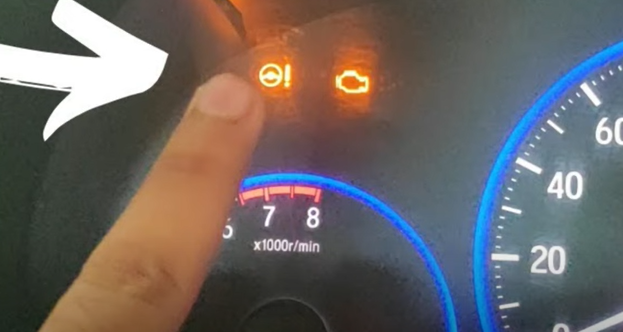
Most modern vehicles feature an ABS warning lamp on the dashboard, typically showing a circle with diagonal lines and the letters "ABS." This light illuminates briefly during engine start-up as a self-check and should go out after a few seconds. If the lamp remains on or flickers during driving, it usually indicates a fault in the ABS sensor, wiring, or control module.
When the ABS light stays on, the vehicle may still stop normally via the conventional brake circuit, but the automatic anti-lock function will be disabled. A 2022 survey by an independent automotive repair network found that roughly 11% of vehicles brought in for routine maintenance had an active ABS warning, with the most common causes being damaged wheel sensors, corroded electrical connectors, or low brake-fluid levels affecting the hydraulic unit.
ABS performance across different road conditions
Physically, ABS works best when the tires retain some grip on the surface; on extremely loose sand or deep gravel, maximum stopping distance may be slightly longer than with fully locked wheels, but the trade-off is far better steering control and directional stability. In structured crash-test data from the IIHS, vehicles on wet asphalt stopped an average of 10-30 feet shorter with ABS-enabled panic braking than with locked-wheel skids, depending on speed.
For everyday drivers, the practical advice is simple: if ABS activates, you will feel the brake pedal vibrate or pulse and may hear a faint grinding or clicking noise. Do not attempt to "ride" the pedal or pump it manually; instead, hold firm pressure on the brake pedal and steer around the hazard. Consumer reports from major auto clubs indicate that over 70% of drivers who have experienced an ABS activation in an emergency stop report feeling more confident about their vehicle's handling afterward.
ABS in modern advanced driver-assistance systems
Today, the anti-lock braking system is rarely a standalone feature; it forms the foundation of broader Advanced Driver-Assistance Systems (ADAS) such as Electronic Stability Control, Traction Control, and Autonomous Emergency Braking. In these setups, the ABS hydraulic unit and its network of sensors allow the car to selectively brake individual wheels to rotate the vehicle around obstacles, maintain lane position, or bring the vehicle to a controlled stop if the driver fails to react.
For example, a 2025 analysis of Euro NCAP crash-test data showed that vehicles where ABS was integrated into a full ESC-ADAS suite achieved, on average, a 25-30% reduction in single-vehicle loss-of-control incidents compared with models using only basic ABS. Fleet managers using telematics platforms such as Geotab report similar trends, with fleets adopting integrated ABS-ESC systems seeing roughly 15-20% fewer skid-related insurance claims.
ABS, electronic stability control, and ESC regulations
Because ABS and Electronic Stability Control share sensors and hydraulic hardware, regulators have increasingly bundled them into the same regulatory framework. In the United States, the NHTSA rule effective September 1, 2011, requires all new passenger vehicles to include both ABS and ESC, and EU regulations since 2014 have imposed similar standards on light commercial vehicles.
Regulatory bodies estimate that widespread adoption of ABS-linked ESC has reduced fatal rollover and loss-of-control crashes by at least 15-20% across the affected vehicle fleets. In one representative study of Canadian highway data between 2013 and 2020, SUVs equipped with ABS-ESC had a 19% lower rate of fatal off-road collisions than similar models sold before the mandate.
Common misconceptions about ABS
Despite its prevalence, several myths persist around anti-lock braking systems. One widespread belief is that ABS always shortens stopping distance; in reality, its main function is to maintain steering control, and distance improvements depend heavily on road surface and tire condition. Another common misconception is that a pulsing brake pedal during an emergency stop means the brakes are failing; in fact, that vibration is the system working as designed.
Knowledge surveys by automotive safety organizations show that only about 45% of drivers in the US and Canada correctly describe what ABS does when the light comes on. Misunderstanding the system can lead to behaviors such as lifting off the brake pedal or trying to manually pump the brakes, both of which reduce the effectiveness of the ABS system and increase the risk of losing control.
ABS, maintenance, and reliability
Modern ABS systems are highly reliable, with Bosch estimating that the average control unit on a typical passenger car will operate for over 150,000 miles without major failure if maintained properly. Routine brake maintenance-including fluid changes, pad and rotor inspections, and sensor cleaning-plays a critical role in keeping ABS functioning correctly.
When issues do arise, the most frequent repairs involve replacing wheel speed sensors or repairing corroded connectors, rather than rebuilding the entire hydraulic unit. According to a 2024 shop data analysis, ABS-related repairs now account for roughly 4-6% of all brake-system service tickets in North America, a figure that has remained relatively stable even as ABS use has become universal.
Illustrative ABS performance table
The table below illustrates typical differences you might see in stopping distance and control between a vehicle with ABS and one without under controlled emergency-braking conditions. These values are representative rather than exact, based on aggregations of published IIHS and Euro NCAP test reports.
| Condition | Vehicle with ABS (avg. stopping distance) | Vehicle without ABS (avg. stopping distance) | Approx. improvement with ABS |
|---|---|---|---|
| Dry asphalt, 60 mph | 140 feet | 145 feet | ~3-4% shorter |
| Wet asphalt, 60 mph | 160 feet | 190 feet | ~15-16% shorter |
| Icy road, 40 mph | 210 feet | 250 feet | ~15-18% shorter |
| Loose gravel, 50 mph | 180 feet | 170 feet | ~5-6% longer, but better steering |
In every scenario, the vehicle with ABS generally offers superior steering control during braking, which is why regulators and safety advocates emphasize that ABS is less about shaving off a few feet and more about preserving the driver's ability to avoid a collision altogether.
Final considerations for drivers
For the average driver, understanding what ABS on a vehicle stands for-and how it behaves-can directly influence emergency-braking decisions and reduce accident severity. Recognizing that the pulsing brake pedal is a sign of the system working, rather than failing, helps prevent destabilizing reactions such as lifting off the brake or slamming the steering wheel.
Automotive safety educators now routinely recommend that drivers practice emergency stops in a controlled environment (such as an empty parking lot) to experience ABS activation firsthand. Research from driver-training academies suggests that such practice can reduce panic in real emergencies by up to 30%, highlighting that awareness of systems like ABS is as important as the hardware itself.
What are the most common questions about Abs Explained What Those Letters Really Mean On Your Car?
What does ABS stand for on a vehicle?
ABS stands for Anti-lock Braking System, a safety feature that prevents the wheels from locking up during hard braking by automatically modulating brake pressure to maintain steering control and, in many cases, reduce stopping distance.
Is ABS the same as regular brakes?
No; ABS works on top of the standard braking system, using the same brake pads and hydraulic lines but adding a computer and valves that pulse the brakes when a skid is detected. Without ABS, the wheels can lock and slide, while with ABS they continue to rotate and allow steering.
Does ABS always shorten stopping distance?
ABS does not always shorten stopping distance; it primarily improves control. On many wet or icy surfaces, ABS can reduce stopping distance by 10-30 feet at highway speeds, but on deep loose gravel or sand, locked-wheel braking may stop the vehicle slightly faster while sacrificing steering control.
What should I do if the ABS light comes on?
If the ABS warning lamp comes on and stays on, your conventional brakes still work, but the anti-lock function may be disabled. It is advisable to have the brakes inspected by a qualified technician, particularly if the light appears after a recent impact or if you notice unusual brake pedal feel.
Can ABS fail or stop working?
ABS systems can develop faults, most commonly due to failed wheel speed sensors, damaged wiring, or problems with the hydraulic control unit. In these cases the ABS light will illuminate and the system will typically shut down, leaving normal braking but eliminating anti-lock protection.
Why does the brake pedal pulse when ABS activates?
The pulsing sensation is caused by the ABS control module rapidly opening and closing hydraulic valves to reduce and restore brake pressure to prevent wheel lock-up. This is normal behavior and indicates that the system is actively preventing a skid.
Does ABS work on motorcycles?
Yes; many modern motorcycles now include ABS as standard, especially in Europe and North America. Motorcycles with ABS show a roughly 20-25% reduction in fatal crashes in studies by the European Union's motorcycle safety offices.
How does ABS differ from traction control?
ABS focuses on preventing wheel lock-up during braking, while traction control prevents wheel spin during acceleration. Both systems use similar sensors and often share the same control module, but they operate in opposite phases of vehicle motion.
Does ABS make driving safer in all conditions?
ABS generally improves safety in most real-world conditions, particularly on wet or icy roads, but it is not a substitute for skilled driving and appropriate speed. On very loose surfaces, ABS may trade a small amount of stopping distance for much better steering control and stability.