From Balloons To Lungs: Real Life Uses Of Boyle's Law

Boyle's law shows up anywhere a gas is squeezed into a smaller space or allowed to expand into a larger one at roughly constant temperature, so the most useful real-life applications are breathing, syringes, scuba diving, aerosol cans, tires, and altitude-related pressure changes.
Boyle's law at work
Boyle's law says that pressure and volume move in opposite directions for a gas, so when pressure rises the gas volume falls, and when pressure drops the gas volume rises. Robert Boyle described this relationship in the 17th century, and the same principle still explains everyday devices and safety risks today. A practical way to remember it is simple: squeeze the gas and it takes up less space; give it more room and it expands.
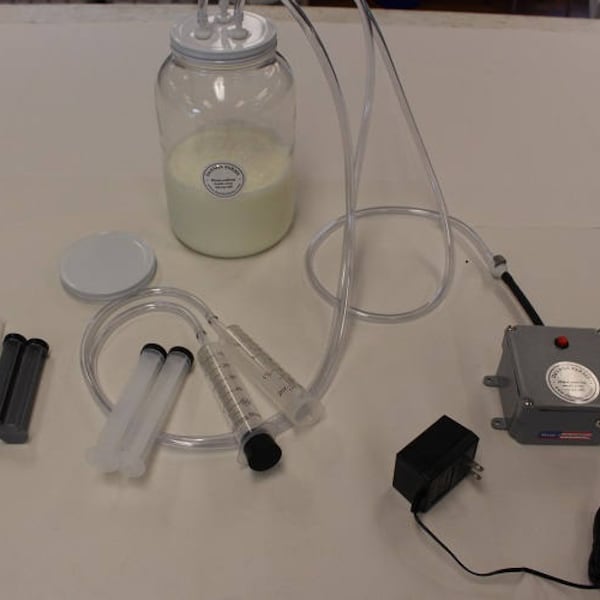
That inverse relationship matters because gases are everywhere in daily life, and many common tools are designed around controlled compression. In a home setting, you can see it in a syringe, a bicycle pump, a spray can, or a sealed snack bag taken up a mountain. In medicine, recreation, and transportation, the same principle helps people move fluids, breathe safely, and avoid pressure-related damage.
Everyday examples
The most familiar real-life applications of Boyle's law are easy to test or observe without special equipment. Each example works because the gas volume changes as outside pressure changes or as a piston, plunger, or chamber moves.
- Breathing: When you inhale, your chest cavity expands, lung pressure drops, and air flows in.
- Syringes: Pulling back the plunger increases volume and lowers pressure, which draws liquid or air into the barrel.
- Scuba diving: As depth increases, pressure rises and air spaces compress, which is why divers must ascend slowly.
- Aerosol cans: The propellant gas is stored under pressure, and releasing the valve lets the gas expand and push product out.
- Bike pumps: Pushing down on the pump reduces volume and increases pressure, forcing air into the tire.
- Altitude changes: At higher elevations, lower external pressure lets trapped gas expand in bottles, bags, or food packaging.
These examples are useful because they connect the abstract gas law to ordinary actions people already understand. If a device depends on moving air, compressing air, or storing pressure, Boyle's law is probably part of the explanation.
How it works
Pressure-volume behavior is easiest to understand with a piston or plunger. If a gas is trapped in a cylinder and you push the plunger inward, the gas has less room, so the pressure increases. If you pull the plunger outward, the gas occupies more space, so the pressure drops. This is the same basic pattern behind a syringe, a hand pump, and a sealed chamber in many mechanical systems.
In real life, temperature and gas leaks can complicate the picture, but the core rule still gives a strong first prediction. That is why Boyle's law is taught early in chemistry and physics: it is simple enough for students to see directly, yet powerful enough to explain safety and design decisions in industry and medicine.
| Situation | What changes | Boyle's law result | Real-world effect |
|---|---|---|---|
| Pulling a syringe plunger | Volume increases | Pressure decreases | Fluid or air enters the syringe |
| Pushing a bike pump | Volume decreases | Pressure increases | Air is forced into the tire |
| Descending in water | External pressure increases | Gas volume decreases | Air spaces compress in the body and equipment |
| Opening a soda bottle | External pressure drops | Gas volume expands | Carbon dioxide forms bubbles |
| Traveling to high altitude | Outside pressure falls | Gas volume increases | Containers may bulge or leak |
Medicine and safety
Medical devices rely on Boyle's law in a very practical way. Syringes, breathing equipment, and suction tools all use pressure differences to move air or fluid. In hospitals, technicians and clinicians must understand how gas volume changes when pressure changes, because incorrect assumptions can lead to inaccurate doses, poor airflow, or unsafe equipment performance.
Boyle's law also matters for patient safety in pressure-related environments. Scuba diving is the classic example: as a diver goes deeper, pressure rises and gas spaces shrink, so rapid changes in depth can be dangerous. The same principle explains why sealed containers can deform during air travel or mountain travel, and why a sealed packet may puff up at higher elevations.
"Any time gas is trapped, compressed, or released, pressure and volume are negotiating with each other."
Home experiments
Simple experiments make Boyle's law memorable because you can see it happen in seconds. A syringe with no needle is one of the easiest demonstrations: cover the tip, pull the plunger, and notice how the trapped air expands. Then push the plunger and feel the resistance increase as the gas is compressed.
- Take a clean syringe with no needle and pull the plunger outward.
- Cover the opening tightly with a finger.
- Push the plunger inward and notice the resistance.
- Pull the plunger back again and observe the gas expanding.
- Repeat the motion and compare the difference in force each time.
A second easy demo uses a closed bottle or a flexible package. When pressure around the container changes, the trapped air inside reacts by shrinking or expanding. The lesson is the same each time: gas volume and pressure are inversely related when temperature stays roughly steady.
Why it matters
Everyday design depends on Boyle's law more often than people realize. Engineers use it to build pumps, regulators, compressors, valves, and safety systems that work predictably under changing pressure. Product designers use it when creating spray containers, inflatable items, and sealed packaging that must hold up under transport and storage.
The law also helps explain failures. A tube that bulges at altitude, a diver who ascends too quickly, or a pump that leaks pressure are all examples of what happens when gas behavior is ignored. Understanding the rule makes it easier to predict not just how a device should work, but how it might fail.
Historical context
Robert Boyle published his work on gas pressure and volume in the 1600s, long before modern chemistry and engineering had developed formal gas laws. What made his insight lasting was not only the experiment itself, but the repeatable pattern behind it. That pattern became one of the foundations of physical science because it could be tested, reproduced, and applied across many situations.
Today, Boyle's law remains a classroom staple and a practical tool. It is still one of the fastest ways to explain why pumps push air, why lungs expand, why divers manage depth carefully, and why sealed gas pockets behave strangely when pressure changes.
Key concerns and solutions for From Balloons To Lungs Real Life Uses Of Boyles Law
What is Boyle's law used for?
Boyle's law is used to explain and predict how gases behave in syringes, pumps, lungs, scuba gear, aerosol cans, and sealed containers when pressure changes.
Why does a syringe demonstrate Boyle's law?
A syringe demonstrates Boyle's law because pulling the plunger increases the gas volume and lowers pressure, while pushing it in reduces volume and raises pressure.
Why do scuba divers care about Boyle's law?
Scuba divers care about Boyle's law because increasing water pressure at depth compresses air spaces, and rapid pressure changes can create dangerous effects in the lungs and other gas-filled spaces.
What is the easiest home example of Boyle's law?
The easiest home example is a needleless syringe, because you can feel the resistance change immediately as you compress or expand the trapped air.
Does Boyle's law apply to liquids?
Boyle's law mainly applies to gases, because gases compress and expand much more noticeably than liquids under ordinary conditions.